In Gratitude
A Tribute to Mrs Takata
Hawayo Takata, 1900 to 1980. She carried Reiki out of Japan, kept it whole for forty years, and placed it in the hands of the women who taught me.
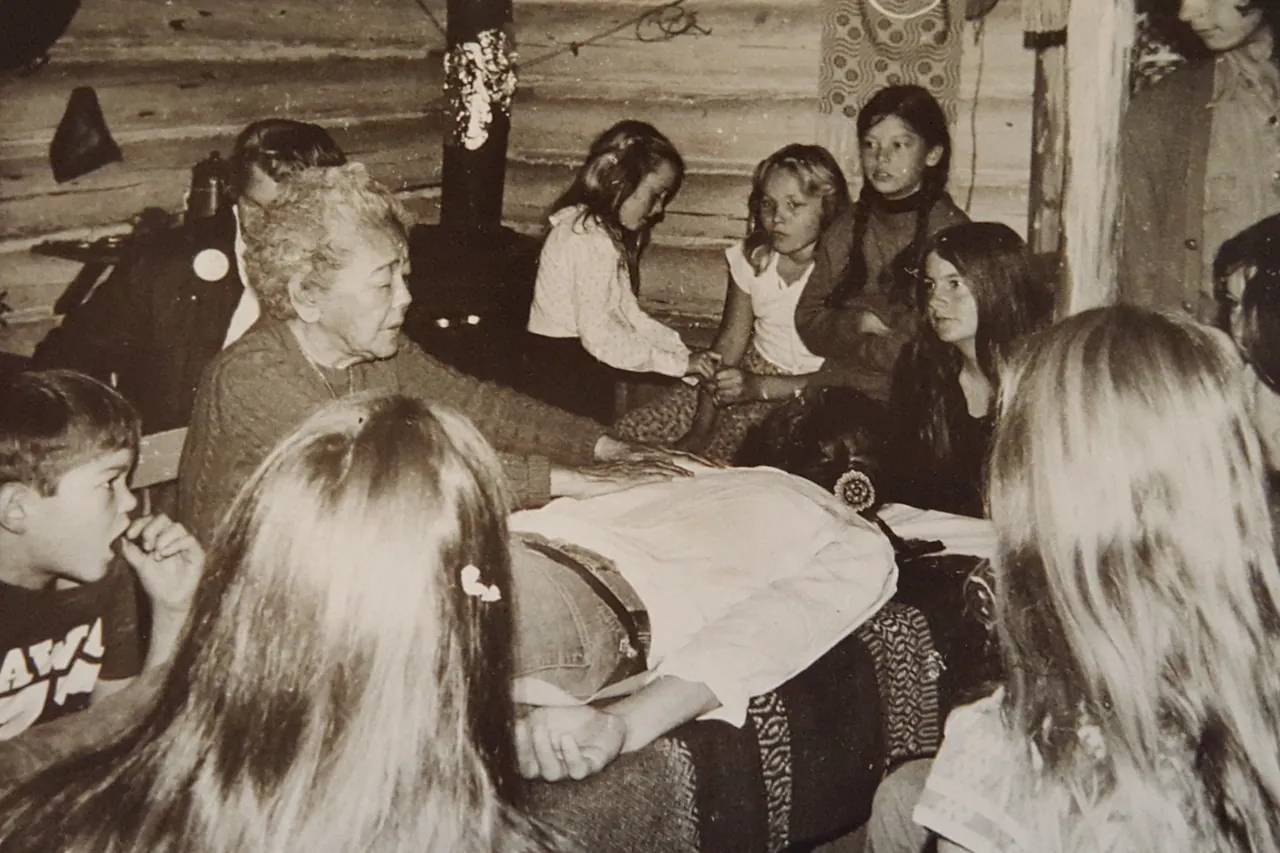
Almost everyone who practises Reiki outside Japan today can follow their line back to one small woman from Hawaii. Her students called her Mrs Takata, and so do we. On my Story of Reiki page, she is one of six names in a list. This page is for her alone.
Her life
She was born in 1900 on the island of Kauai to parents who came from Japan to work the sugar plantations, and she grew up working too. She married, had two daughters, and was widowed in 1930. Within a few years her health failed. The story she told for the rest of her life is that she lay on an operating table in Japan, ready for surgery, when she heard a voice say the operation was unnecessary. She asked the surgeon if there was another way and was taken to Chujiro Hayashi’s clinic in Tokyo.
There she received Reiki every day for months and recovered. Then she asked to learn it. A woman, a foreigner, a widow with no standing: it was not a request Hayashi had to grant, but he did. She trained in his clinic, went home to Hawaii, and in February 1938, when he visited her, he made her a Master.
For more than thirty years after that she practised. She gave treatments, taught the first and second degrees, and carried Reiki through a war when being Japanese in Hawaii was very hard. Only in the 1970s, in her seventies, did she begin to train Masters. By the time she died in December 1980, she had instructed twenty-two. Among them were her granddaughter Phyllis Furumoto and Wanja Twan of British Columbia, my teacher’s teacher.
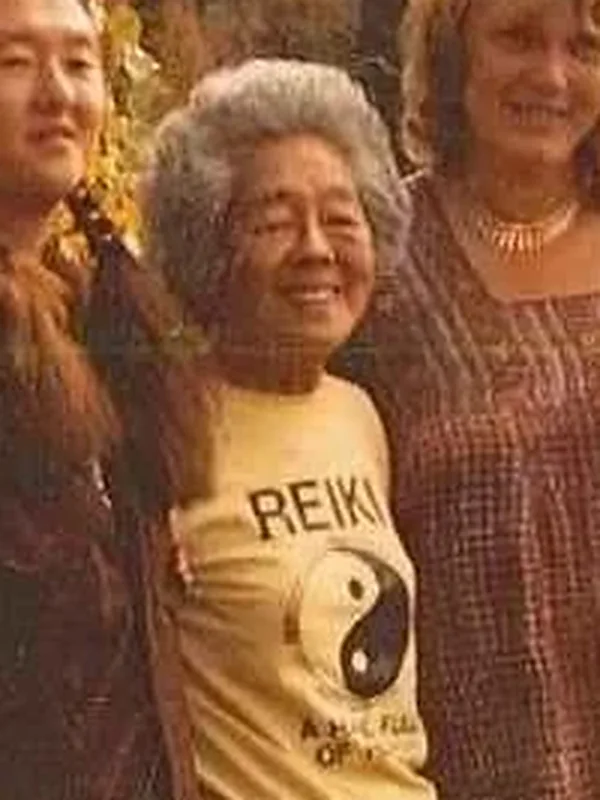
The way she taught
Mrs Takata taught the way she had been taught: by voice and by hand. Her students did not take notes and there was no book. She told stories, showed the hand positions, and then had people put their hands on each other to find out for themselves. She kept Reiki simple on purpose. Hands on, Reiki on. Hands off, Reiki off. Treat yourself first every day, then your family. She did not want students who could explain Reiki. She wanted students who did it.
Look again at the photograph at the top of this page. A log cabin, a child on the table, her hands resting on him, and a room full of children watching. She treated whoever was in front of her and let them watch because watching was part of the teaching.
The precepts, as she taught them
- Just for today, do not anger.
- Just for today, do not worry.
- Honour your parents, teachers and elders.
- Earn your living honestly.
- Show gratitude to every living thing.
Five lines said every morning. She asked for nothing more or less.
Where I stand in her line
Two people stand between Mrs Takata and me, and I have gained knowledge from both. Wanja Twan was one of her twenty-two Masters, initiated in British Columbia in 1979. Inger Droog, my teacher, learned from Wanja and Mrs Takata herself. I achieved Master status in 2012, the sixth in a line beginning with Mikao Usui. In 2015 I sat with Wanja Twan and the other Masters of our lineage at the conference in Sidney, British Columbia and heard the stories told the way Mrs Takata told them.
So when I teach, I teach as she did. No notes. Plenty of time with hands on. The same symbols she received from Hayashi passed on the same way. The precepts in her English. And the rule she lived by, the simplest: use it and it works.
I am grateful to her every day, most of all for her patience. She practised quietly for more than thirty years before training a single Master, so what reached my teachers was whole and could travel as far as the reading and healing I do here in Calgary. Thank you, Mrs Takata.